How Many Lives Can an Industrial Drum Have
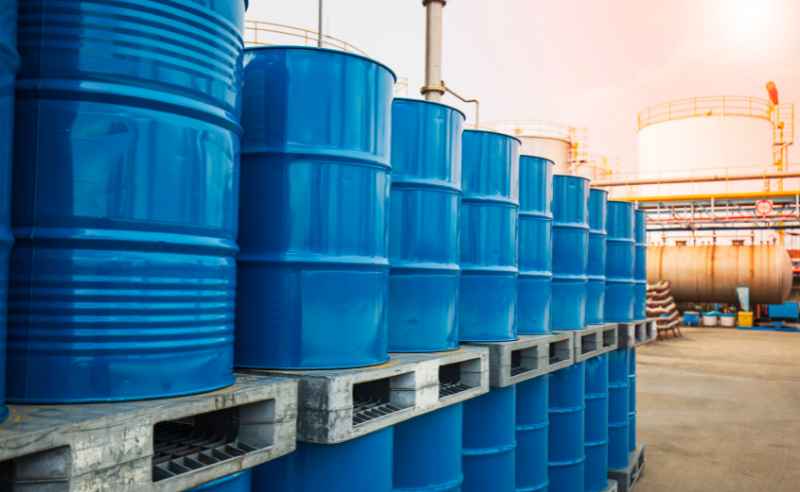
In the industrial sector, it is common to think of a drum as a simple, single-use container: filled, transported, emptied, and discarded. However, this view overlooks an operational reality that reconditioning plants know well: a well-manufactured and properly managed drum can complete several life cycles without losing performance or compromising safety.
The question, therefore, is not so much whether a drum can be reused, but how many times and under what conditions. The answer depends on a combination of technical, regulatory and management factors.
What do we mean by the service life of an industrial drum?
The service life of an industrial drum is not limited to the period during which it contains the product. It encompasses the entire cycle that the container can safely complete: manufacture, first use, recovery, technical inspection, professional cleaning, reconditioning and return to the market for a new use.
This cycle may be repeated several times, provided that the container passes the necessary checks at each stage. A drum does not reach the end of its service life simply because it has been emptied; it reaches the end of its service life when it no longer meets the required technical and safety standards.
Factors that determine how many uses a drum can have
Not all materials arrive for reconditioning in the same condition. Metal drums and HDPE plastic drums have a proven track record, but they also have their limitations: metal requires more aggressive shot-blasting and thermal cleaning processes, whilst plastic is subject to material fatigue and sensitivity to certain chemicals, which shortens its actual reusability sooner than expected.
The eco-kraft drum is designed from the outset to avoid precisely these limitations. Its construction is conceived from the start to facilitate the prioritisation of successive uses, from the most demanding chemical conditions to the least, without requiring the more invasive treatments that other materials do require, and without compromising traceability at every stage. In practice, it is a format designed to be reused effectively, not merely to withstand use.
The product it has contained.
A drum that has been used to transport corrosive products requires more thorough cleaning and inspection procedures than one that has contained less demanding products. The eco-kraft drum is designed to adapt to this hierarchy of uses more efficiently, allowing each cycle to be utilised to the full without compromising the next.
The physical condition of the packaging.
Each inspection assesses dents, corrosion, cracks, deformations, leak-tightness and the condition of welds or threads. As it does not rely on metal welds or on a material prone to structural fatigue such as plastic, the eco-kraft drum simplifies many of these checks and reduces critical failure points.
The reconditioning process carried out.
This is where much of the difference lies between a container that reaches the end of its service life prematurely and one that extends its service life by several cycles. Professional reconditioning is not limited to washing and repainting: it involves inspection, cleaning and regulatory compliance protocols, including ADR regulations when the container is intended for the transport of dangerous goods. The eco-kraft drum is specifically designed to simplify and reduce the cost of this stage compared with other formats.
Steel and plastic do not age in the same way
It is worth noting that not all drums age in the same way. Carbon steel responds well to thermal cleaning and shot blasting, processes which restore the container’s surface to a condition that is practically as good as new.
Plastic, on the other hand, has a clearer limit: material fatigue and exposure to certain chemicals ultimately determine when an HDPE container is no longer fit for reuse, however sturdy it may appear at first glance.
This is where the serious refurbishment work comes in: it is not just a matter of washing and repainting, but of inspecting welds, checking for leaks and certifying that the container complies with ADR regulations when it is intended for the transport of dangerous goods.
Products such as the eco-kraft drum fit in well with this philosophy, because their very manufacturing process is designed to allow for a second and third use right from the outset.
At each of these stages, a container such as the eco-kraft drum tends to require less handling and incur lower costs than metal or plastic alternatives, precisely because it is designed from the outset for this type of process.
The economic and environmental argument
Extending the life cycle of a drum has a direct impact on the profit and loss account. A reconditioned drum costs a fraction of the price of a new one, and for companies that handle volumes of hundreds or thousands of units a year, that difference represents a completely different purchasing budget.
In addition to this economic argument, there is also the environmental one, which is no longer merely an optional added value but has become a requirement that auditors and customers demand in writing. The eco-kraft drum directly addresses this dual requirement: it incorporates materials with a lower environmental footprint right from the production stage and, at the same time, reduces the costs associated with each reconditioning cycle compared to metal or plastic.
A question of management, not just of equipment
Ultimately, the lifespan of an industrial drum is not determined solely by the material from which it was manufactured, but by the subsequent chain of decisions: how it is cleaned, who inspects it, what it is reused for, and the level of traceability with which each cycle is documented.
But choosing the right packaging format makes everything else easier. The Eco-Kraft drum is designed to make that decision-making process simpler, more cost-effective and more sustainable than traditional alternatives, cycle after cycle.