Storage of Sustainable Raw Materials in Certified Industrial Environments
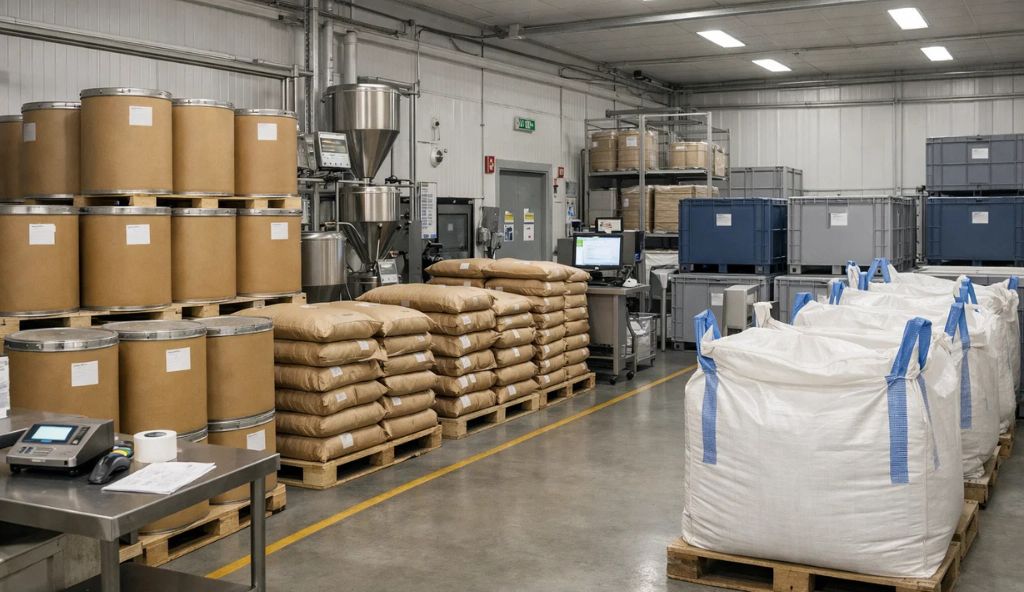
The storage of sustainable raw materials is a key aspect in environmentally certified factories. It is not just a matter of storing materials, but of doing so in a manner consistent with criteria of efficiency, traceability and reduced environmental impact.
Materials such as powders, grains, leaves or small parts have specific needs that require well-defined technical solutions aligned with the plant’s sustainability objectives.
Types of raw materials and storage requirements
Sustainable raw materials can come from organic farming, recycling or low-impact industrial processes. Powders and grains, such as vegetable flours, technical ingredients or recycled materials, require closed systems that prevent contamination and dispersion.
Cardboard drums are frequently used because of their strength, renewable origin and compatibility with dry and powdery materials.
Sheets, fibres or laminates need protection from moisture and light to maintain their integrity. Small parts, common in industrial sectors, must be stored in an orderly manner, with clear identification and controlled access, to ensure a stable production flow.
Storage solutions aligned with environmental certification
Certified factories prioritise reusable, durable systems made from responsible materials. Kraft cardboard drums, returnable containers and stackable boxes made from recycled materials reduce waste and improve space management.
These containers also facilitate process standardisation and simplify handling and cleaning tasks.
Bulk storage is an efficient option when the process allows it, as it reduces secondary packaging. For small parts, modular systems and standardised containers help minimise internal movements and optimise internal logistics.
Environmental control and reduction of waste
Proper storage of raw materials depends on controlling factors such as temperature, humidity, and ventilation.
In environmentally certified facilities, these parameters are usually monitored continuously. Stable control prevents degradation, loss of quality and material waste.
The use of suitable packaging, such as Kraft drums for dry products, helps to maintain constant conditions and protect the contents during prolonged periods of storage.
Traceability and inventory management
Traceability is a common requirement in environmental audits. Knowing the origin, batch and internal route of each raw material improves transparency and management. The support of digital systems and clear labelling allows for accurate inventory control and prevents unnecessary accumulation.
Well-planned sustainable storage reinforces consistency between environmental commitments and daily factory operations, with clear benefits in terms of efficiency and control.