Cardboard Drums Containing Vitamin and Mineral Supplements
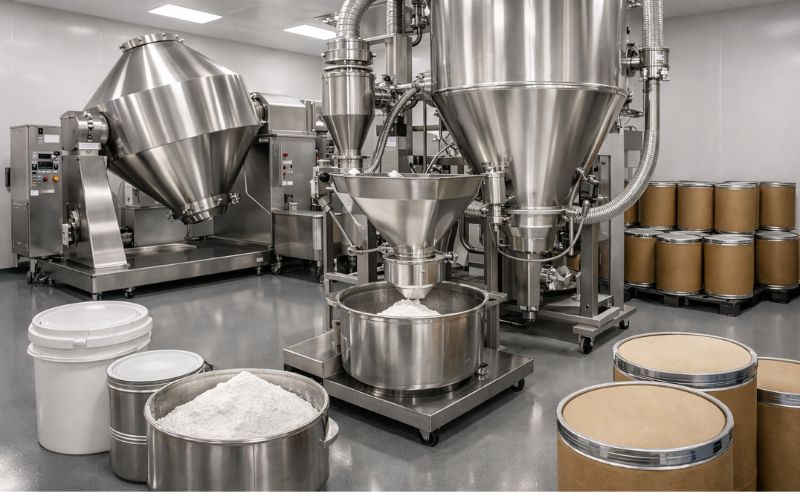
Cardboard drums enable nutraceutical blends to be stored under stable conditions, preventing quality loss during storage, transport, and handling.
With this type of product, the packaging is not merely a passive container. It forms part of the system that keeps the formulation intact from the moment it leaves production until it is used.
What is a cardboard drum, and why is it used in the nutraceutical industry?
A cardboard drum is a multi-layered container with a rigid structure and an internal barrier system designed to isolate the product from the surrounding environment.
Its use addresses a clear need: to handle bulk products without compromising their integrity. The combination of external strength and internal protection makes it a balanced solution that combines safety and operational efficiency.
What are the risks associated with vitamin and mineral supplements?
Vitamin and mineral blends can degrade due to factors such as moisture, oxygen, light, or external contamination if not properly controlled.
These risks do not operate in isolation. Within the supply chain, even minor changes in temperature or environmental exposure can accelerate degradation processes. The result is often a loss of efficacy or changes in the product’s texture.
How do cardboard drums protect these mixtures?
Kraft fibre drums protect the contents using internal barriers and maintain product stability thanks to their sturdy structure.
The system works on two levels. On the one hand, the structure allows for handling and stacking without deformation. On the other hand, the interior creates a controlled environment that limits the product’s interaction with the outside world.
What are their advantages over other types of packaging?
Kraft cardboard drums reduce weight, make handling easier, and improve logistical efficiency without compromising product protection.
In day-to-day operations, this translates into less effort during handling, better use of space, and lower transport costs. Furthermore, they fit well into standard storage and distribution systems.
What requirements must a container for nutraceutical use meet?
The packaging must comply with applicable regulations, ensure safety when in contact with the product, and be tailored to the specific requirements of each formulation.
This involves selecting suitable materials, determining the required barrier level, and ensuring that closure systems maintain the internal conditions throughout the product’s lifespan.
How can you make the most of it in your operations?
Choosing the right packaging, combined with correct filling, sealing, and storage practices, helps to maintain product quality and reduce incidents.
Adjusting the barrier type, monitoring environmental conditions, and treating the packaging as part of the process—rather than as a separate element—helps to improve the consistency and reliability of the final result.