Textile Recycling in Shops: Collection Points with Kraft Drums
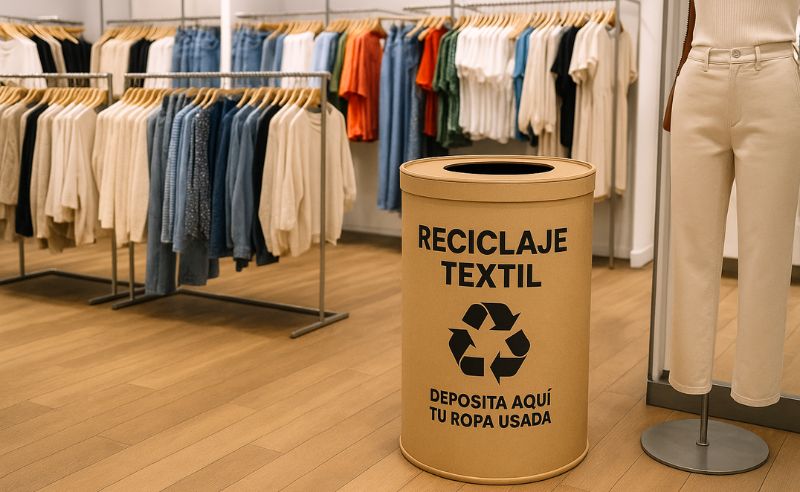
If you are responsible for setting up collection and recycling points in a clothing store or fashion chain, the challenge is clear. Comply with regulations. Make it easy for customers to use. Do not take up unnecessary space. Maintain consistency with the brand image.
Textile recycling is no longer optional in the fashion retail industry. The European Union requires separate management of textile waste from 2025, and consumers expect to see clear solutions in stores. They ask questions. They observe. They compare.
To meet these demands, you need a system that is simple, visible and easy to replicate at different points of sale. A system that works just as well in a flagship store as it does in a smaller shop.
Kraft fibre drums function as textile waste collection points integrated into the retail space. They bring order to the flow of used garments, facilitate the communication of the recycling message and allow operational control to be maintained without complicating internal logistics.
Why textile recycling is already a real challenge in shops
From 1 January 2025, the separate collection of textile waste will be mandatory in all EU Member States, according to Directive (EU) 2018/851 on waste. In Spain, this obligation is set out in Law 7/2022 on waste and contaminated soil for a circular economy, promoted by the Ministry for Ecological Transition and Demographic Challenge.
This directly affects:
- Fashion shops with used clothing return programmes.
- Businesses that generate textile waste due to returns, breakages or samples.
- Large retail outlets with circular economy campaigns visible to customers.
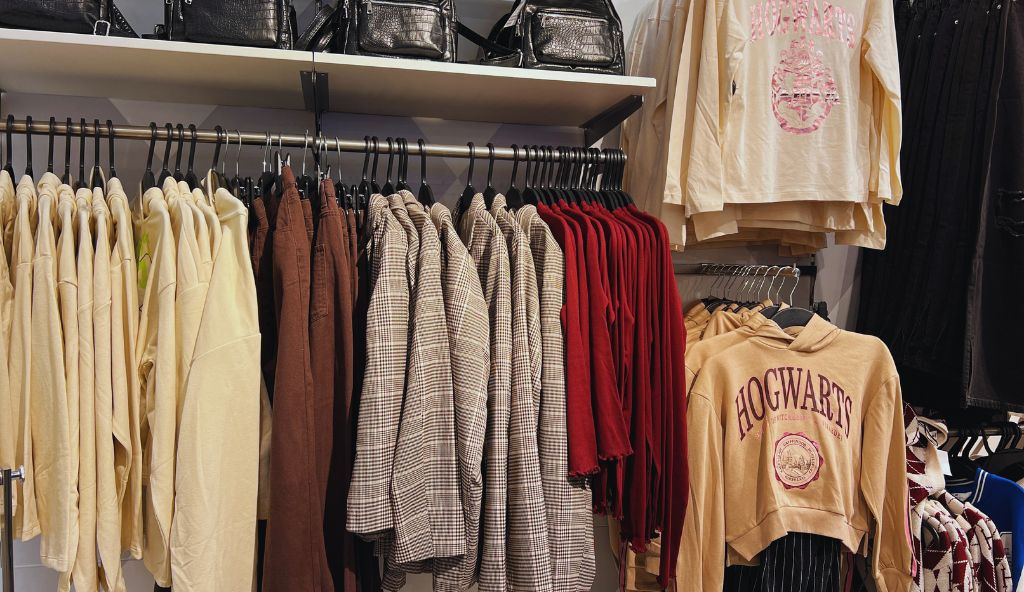
The challenge is not only legal. It is logistical and image-related. Textile waste takes up space, degrades if not managed properly, and, if displayed in a disorderly manner, conveys the opposite message to that sought by the brand.
Practical implications for the point of sale
Before setting up a collection point, it is important to consider how it will coexist with the shop’s daily operations. It is not a one-off element. It forms part of the customer journey and internal operations.
Ease of use. Customers must be able to recognise the collection point without having to read long texts. It must be obvious how to open it. The act of depositing an item of clothing must be quick and easy. If it causes any confusion, the system will cease to function.
Order and cleanliness. Used clothing must be protected at all times. A closed container prevents visible accumulations, odours and a feeling of neglect. This is key in fashion shops, where the perception of space directly influences the shopping experience.
Brand consistency. The collection point communicates as much as the product itself. Natural and recyclable materials reinforce the environmental message. An inconsistent system generates mistrust, even if the initiative is sound.
Internal use. Staff need a container that is easy to move, sturdy and manageable. Emptying or moving it should not require extra time or effort. If it complicates the routine, it ends up being misused or neglected.
The Kraft drum as a functional solution for shops
The Kraft fibre drum meets the real needs of a textile collection point in retail. It is based on industrial logic, adapted to the commercial environment and daily use in shops.
Its rigid structure allows you to store a large volume of garments without deformation. It retains its shape even when the bin is full. This prevents overflowing and improves the sense of order in the sales area.
The weight is reduced compared to other standard containers. This makes it easier to move around the shop and simplifies transport when empty. Staff can handle it without any extra effort.
The Kraft drum is suitable for configurations designed for spaces open to the public. It can incorporate a lid, controlled filling spout and closure systems. These solutions prevent tampering, protect the contents and reduce incidents in-store.
From an environmental perspective, Kraft fibre comes from renewable resources and is recyclable. It is a common material in well-established collection circuits. In Spain, paper and cardboard have a recycling rate of over 80%.