Screen-printed Packaging
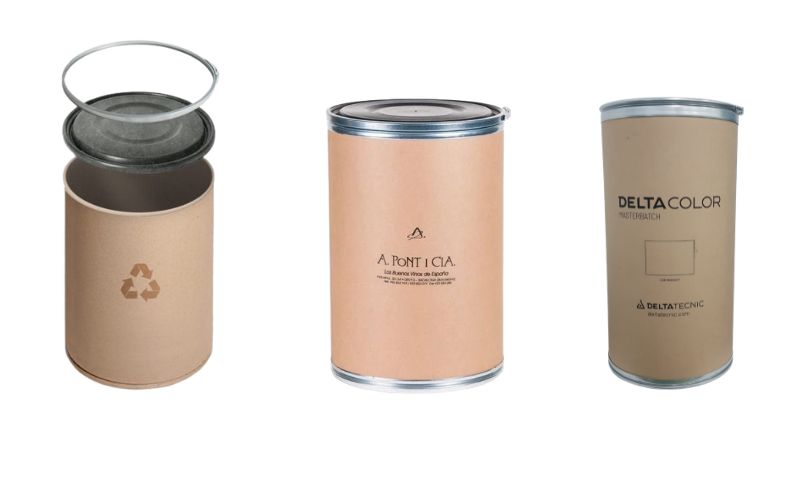
Screen-printed packaging achieves something no advertising campaign can match: it finds its way onto a customer’s premises, stays there for weeks, and does so without any media costs. A kraft fibre drum with custom screen printing isn’t just a container with a logo; it’s a communication tool that makes its own way to a third party’s warehouse.
In this article, we explain what the customisation of kraft drums actually offers, how it affects UN type approval, and why an increasing number of procurement departments are viewing it as part of their sustainability strategy.
What is screen-printed packaging and what is it used for?
A screen-printed container is a kraft fibre drum onto which the logo, corporate colours and any technical information required by the customer (warnings, product codes, handling instructions) are printed using industrial screen printing. It is not simply a matter of applying a brand: it fulfils at least two functions at the same time.
1. Brand identity
In sectors such as the chemical and pharmaceutical industries, where traceability is just as important as the contents themselves, clearly labelled packaging is no longer merely an aesthetic detail but has become part of standard operating procedure. Visual identity in industrial packaging builds brand recognition at every stage of the logistics chain, from the factory to the end customer’s warehouse.
2. Operational function
Colours differentiated by product, visible codes and instructions printed directly onto the cardboard streamline the customer’s stock management and keep the warehouse tidy without anyone having to think twice. Brand image and process control go hand in hand in a single item.
Why personalisation builds trust
Trust is not built through design, but through consistency. When a manufacturer maintains the same print quality and the same lead times, order after order, the customer no longer has to worry on that front: fewer suppliers to manage, greater certainty with every restock.
At Joaquín Alberto, the customisation of kraft drums (screen printing, handles, special bases, waterproof coating) is not a last-minute addition, but rather an integral part of the production process from the outset.
Does screen printing affect UN type-approval?
This is one of the most common concerns amongst first-time buyers: no, customisation does not affect type-approval. A kraft drum designed for the transport of dangerous goods retains its full UN certification, and the screen-printing process is validated within the ISO 9001 quality management system itself, whilst ensuring that the technical structure of the container is maintained at all times. These are two separate sets of requirements that coexist seamlessly.
Screen-printed packaging and sustainability: a selling point that speaks for itself
Fibre drums already have an advantage over plastic or metal due to their recyclability and lower carbon footprint during transport. If, in addition, they are screen-printed with the environmental commitment of the company using them, that container ceases to be mere packaging and becomes a form of communication that travels on its own – without any campaign behind it – all the way to a third-party warehouse.
Few arguments are as straightforward for a procurement department that reports to a sustainability committee: choosing a supplier that customises its kraft drums according to environmental criteria is, in itself, a CSR decision that is evident in every shipment.
In a market where trust is earned order by order, the key selling point isn’t spoken by anyone: it’s printed right there on the drum itself, even before the customer picks up the phone. If you’re looking for screen-printed containers that meet UN certification standards, ISO 9001 quality standards and demonstrate a genuine commitment to sustainability, at Joaquín Alberto we’ve been customising kraft drums since 1939.