Approved Packaging: What You Should Demand from Your Supplier
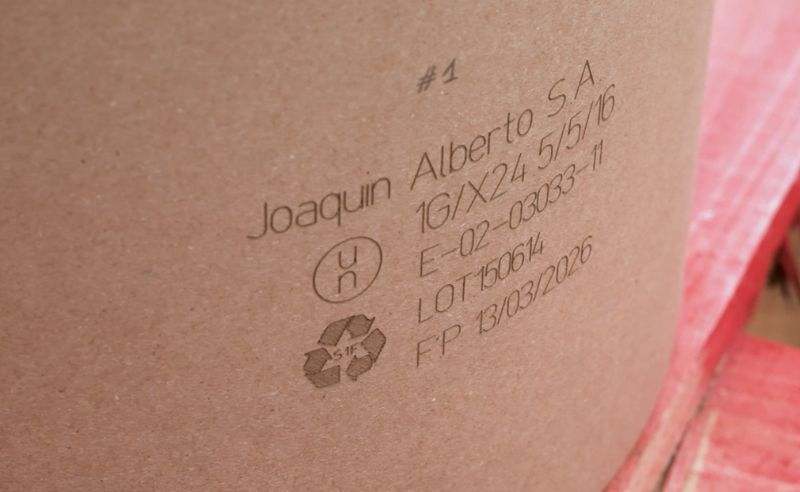
When selecting approved packaging, buyers with less technical expertise often overlook one check that affects the entire logistics operation: does the packaging have a valid UN approval for the goods being transported?
What may seem like a mere administrative formality is, in reality, the difference between a vehicle leaving the warehouse on schedule or being held up at customs due to incomplete documentation. In industrial logistics, the cost of a shipment being held up often outweighs any savings made on the unit price.
What does UN type-approval technically certify?
UN (United Nations) type approval certifies that a packaging model has passed, in an accredited laboratory, the series of tests required by the UN Model Regulations on the Transport of Dangerous Goods: free-fall test, stacking test, internal hydraulic pressure test and leak test, amongst others, depending on the nature of the contents (solid, powder, granules or semi-liquid) and the assigned packaging group (I, II or III).
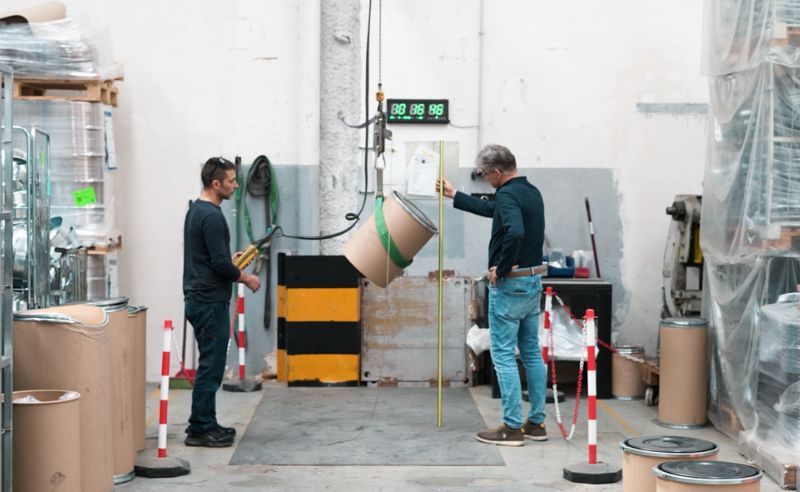
Once the test has been passed, the container is assigned a UN marking code (for example, a fibre drum is usually marked as 1G/Y, followed by the authorised relative density, the test pressure, the year of manufacture, the country and the certifying body), which must be clearly legible on each unit. This marking is not merely for show: it is the documentary evidence required by the freight forwarder, the shipping company or the customs authority before authorising the movement of the cargo.
In our experience with clients in regulated sectors, many procurement managers understand the importance of type approval, but do not formally verify it before placing an order: they negotiate the price and delivery time, and it is only when the freight forwarder requests the type approval certificate that they discover the supplier cannot provide proof of it for that specific batch. At that stage, switching suppliers is no longer a viable short-term option.
Suitable material does not mean approved packaging
Not all kraft fibre drums are certified by default, even if the raw material is suitable for dangerous goods. Certification is specific to a particular design: it depends on the thickness of the kraft paper layers, the closure system, the reinforcement of the hoops and the production batch itself. A change to any of these variables invalidates the previous certification.
Confusing ‘suitable material’ with ‘certified packaging’ is the most common technical mistake made by buyers who are new to this type of industrial procurement. For this reason, at Joaquín Alberto we publish our UN approvals alongside our ISO 9001 (quality) and ISO 14001 (environmental management) management system certifications: this is not a marketing ploy, but a way of addressing, before it even arises, the technical objection that often stands in the way of a purchasing decision.
When this documentation is available from the very first point of contact, the nature of the business discussion changes: the buyer stops asking whether approval has been granted and moves straight on to negotiating deadlines and volumes.
A certification subject to expiry and traceability, which is non-transferable by default
Transport regulations, which are aligned with the European ADR framework (and equivalent to the RID for rail transport and the IMDG for maritime transport), require full traceability by batch and periodic renewal of type-approval, rather than a certificate that remains valid indefinitely. Any change to the raw material, the closure system or the production process requires the manufacturer to repeat the type-approval process with the competent authority.
The stability of an established manufacturer, with over 85 years’ industrial experience, structurally reduces this risk: internal certification processes and the associated documentation have been systematised for decades, which minimises the likelihood of issues arising during certificate renewal.
When technical approval and ESG criteria converge
There is one factor that is becoming increasingly important in purchasing decisions: technical approval and sustainability are no longer assessed in isolation. Today, a procurement department needs to demonstrate to its sustainability (ESG) committee that the selected packaging is recyclable and has a lower carbon footprint in terms of manufacturing and transport, whilst also complying with UN regulations on dangerous goods. The kraft drum meets both these requirements simultaneously – a rare combination in the industrial packaging market.
The question that really weeds out the suppliers
The technically relevant question is not ‘Do you have type-approved drums?’, but ‘Can I view the type-approval documentation for the specific batch to be manufactured and confirm that it is still valid?’. That question immediately distinguishes suppliers with auditable quality processes from those who improvise as they go along.
At Joaquín Alberto, we have been answering this question for decades by providing the available documentation right from the start: our approved packaging carries valid UN certification, batch traceability and is backed by ISO 9001 and ISO 14001.