Recycling in Coworking Spaces
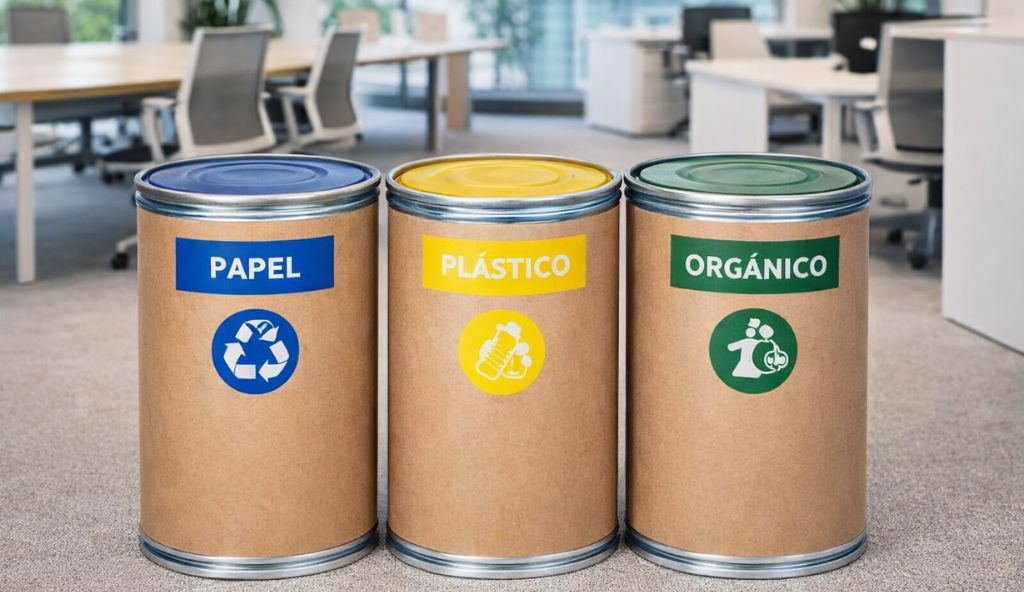
Coworking spaces are hubs of daily activity, diverse profiles and a constant flow of waste. Paper, packaging and organic waste are part of the routine. Managing them well is a practical matter and also a sign of how the space is organised.
Waste separation in coworking spaces requires clear and easy-to-understand solutions. Cardboard bins with corporate labels allow you to create visible collection points that are consistent with the daily use of the space.
Clear separation from the first use
The main challenge is to avoid confusion. If the system is not understood, it will not be used correctly. Cardboard drums help to clearly define each type of waste.
Paper and cardboard. For documents, notebooks, and light packaging.
Plastic and packaging. Bottles, wrappers and containers in common use.
Organic. Food waste from kitchens and communal areas.
The label serves a key function. It indicates what to deposit and reduces errors. When it incorporates the corporate design, it reinforces the identity of the coworking space without adding extra signage.
Integration into the working environment
A coworking space cares about aesthetics because it is part of its identity. The furniture, lighting and materials reinforce a sense of order and consistency. In this context, cardboard drums are a better fit than rigid or industrial-looking solutions.
The Kraft finish blends naturally into open-plan offices and creative spaces. They can be placed in common areas, meeting rooms or break rooms without disrupting the visual harmony of the whole.
They also provide flexibility. If the coworking space is reorganised or expanded, moving or adjusting the collection points is quick and easy.
Daily use and consistent messaging
Separating waste is an everyday task in a coworking space. When the system is visible, clear and orderly, it integrates naturally into the dynamics of the space. The use of kraft drums communicates a conscious choice for recyclable materials and responsible management.
It’s not just about collecting waste. It’s about doing it in a way that makes sense, in line with the actual use of coworking and the people who use it every day.